




Chronic dysphagia and the risk of food impaction can lead to real-world consequences1
MEALTIME BURDEN

~2 out of 3 patients
reported adaptive eating behaviors2*
EMOTIONAL BURDEN

~7 out of 10 patients
reported limiting social activities3†
ED BURDEN

~3X more
hospital visits
for dysphagia or food impaction from 2009 to 20194‡
Despite current approaches, challenges remain5-7
CHRONIC INFLAMMATION CAN LEAD TO DISEASE PROGRESSION8
~7 out of 10 patients demonstrated fibrostenosis8§‖
§At time of EoE diagnosis in a retrospective study of 721 patients.8
Stricture risk increased by ~9% for each year of undiagnosed EoE8‖


Although traditional approaches are effective, many patients with EoE will not respond to dietary limitations, swallowed topical corticosteroids, or PPIs5,9
Newer approaches that focus only on downstream mediators may leave patients exposed to the possibility of unaddressed inflammation10
Recent science is challenging the traditional approach to understanding EoE.10
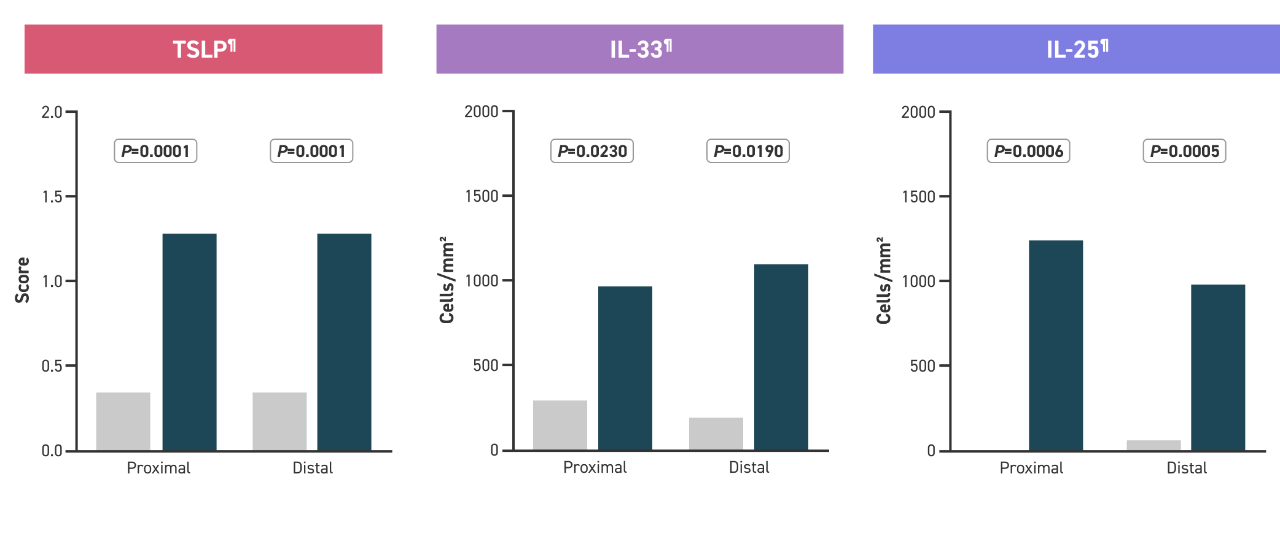
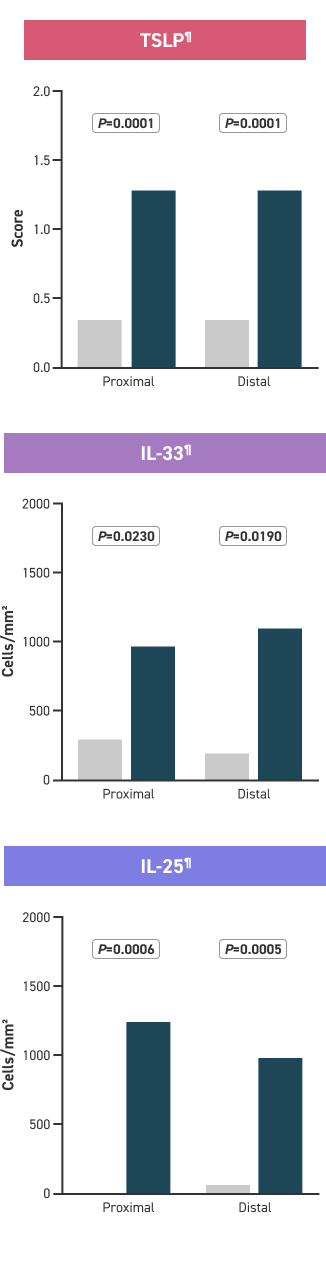
Data show key drivers of disease—TSLP, IL-33, and IL-25—are overexpressed in EoE10,11
CYTOKINE EXPRESSION IN ESOPHAGEAL BIOPSIES FROM PATIENTS WITH EoE11